
Table of Contents
- Fast Vinyl Banner Printing for Events: What Changes When the Clock Is Running
- Same-Day Vinyl Banner Printing: How It Works and What It Costs
- Vinyl Banner Sizes: Matching Dimensions to Your Venue and Viewing Distance
- 13 oz vs. 18 oz Vinyl Banner: Choosing Material Weight for Indoor and Outdoor Use
- Event Banner File Requirements: Artwork Checks That Prevent Reprints
- Shipping, Pickup, and Contingency Planning for Deadline-Critical Events
- Installation, Transport, and Storage: Making Your Banner Last Beyond One Event
- Conclusion
- Frequently Asked Questions
Last Updated: October 9, 2026
Fast Vinyl Banner Printing for Events: What Changes When the Clock Is Running
Fast vinyl banner printing for events means producing a custom banner on a compressed schedule, often within 24 hours, so it arrives before your event date.
Most rush orders fail for reasons unrelated to the printer: a low-resolution logo, a missing bleed margin, or an order placed after the production cutoff delays a banner as surely as a machine breakdown.
Same-Day Vinyl Banner Printing: How It Works and What It Costs
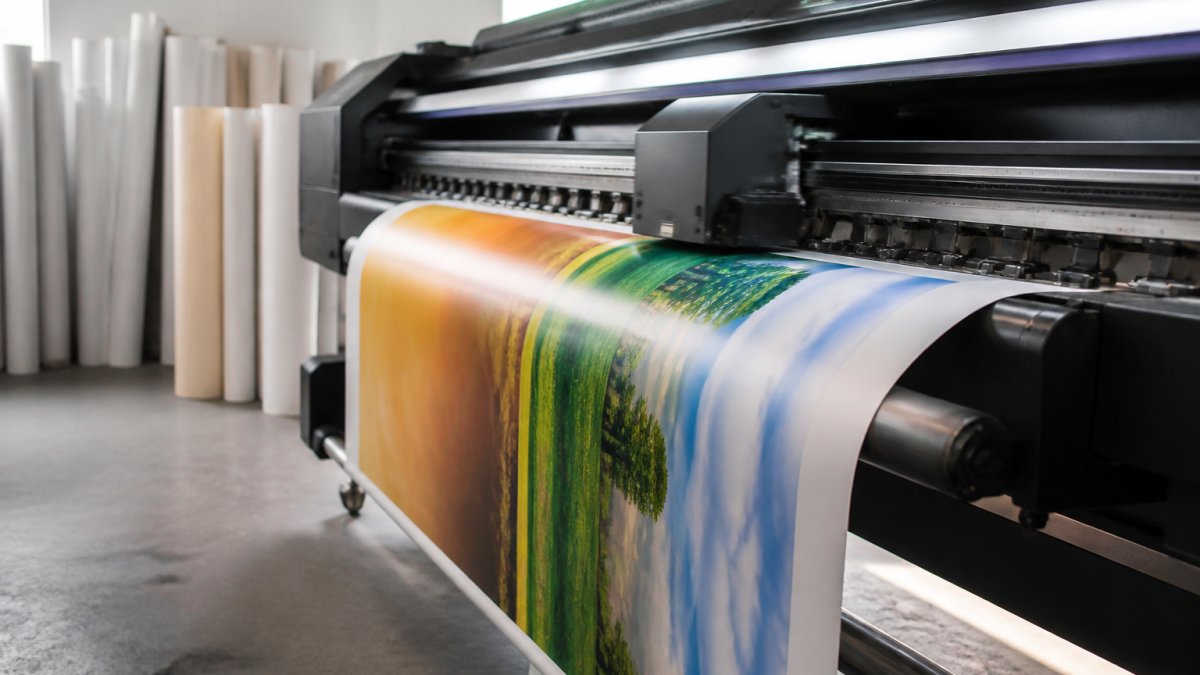
Same-day vinyl banner printing moves your order into a reserved production slot once the artwork passes a file check, skipping the standard queue. Whether your order clears the cutoff depends on when you submit, how clean the file is, which finishing you select, and whether you pick up or ship.
The Real Rush-Order Timeline, Hour by Hour
A realistic same-day timeline looks like this:
| Stage | Typical Time | What Happens |
|---|---|---|
| File submission and check | 30-60 minutes | We verify resolution, bleed, color mode, and safe margins |
| Proof approval | 15-30 minutes | You confirm the digital proof before printing |
| Large-format printing | 1-2 hours | Wide-format printer runs the banner |
| Finishing | 30-60 minutes | Grommets, hems, or pole pockets are added |
| Pickup or shipping | Varies | Local pickup same day; overnight shipping for delivery |
The clock starts when your file passes review, not when you email it. A file needing correction adds a full round-trip of communication, and most missed same-day orders fail at the file-check stage.
A Practical Ordering Timeline by Deadline
Use this as a planning framework, not a promise. Cutoffs vary by shop, size, and finishing, so confirm yours in writing.
- Same-day pickup: Submit a print-ready file before the morning cutoff, approve the proof within 30 minutes, and pick up in the afternoon. If your file needs edits, assume same-day is lost.
- Next-day pickup: Submit before the afternoon cutoff the day before. Safest for an unpre-flighted file, since it leaves room for one correction round.
- Next-day shipped (overnight): Submit before the shipping cutoff, usually earlier than the production cutoff because carrier pickup is fixed. Confirm the carrier's cutoff for your destination ZIP code.
Often the only difference between a same-day and next-day order is one file revision. If unsure your file is clean, order next-day as insurance.
Rush Fees and Delivered Price: What Actually Drives the Total
Three factors push a rush order above a standard order: the compressed production window, your finishing options, and the shipping speed required. Overnight shipping and one-day production cost more because they consume reserved capacity.
The total delivered price matters, not the print cost alone. A cheaper print with slow shipping that misses your event is the most expensive banner you will ever buy.
Factors that move the delivered price up or down:
- Size and square footage: Larger banners use more material and printer time, so they cost more and take longer.
- Material weight: 18 oz vinyl costs more than 13 oz, and mesh sits between them depending on the job.
- Finishing: Grommets and hems add labor; pole pockets and reinforced edges add more.
Vinyl Banner Sizes: Matching Dimensions to Your Venue and Viewing Distance
Vinyl banner sizes should be chosen by viewing distance and mounting location, not budget. A banner read from 10 feet needs far less height than one read across a trade show hall.
Common size and use pairings:
- 2 ft x 4 ft: Table throws, small storefront displays, close-range signage
- 3 ft x 6 ft: Step-and-repeat backdrops, photo walls, booth side panels
- 4 ft x 8 ft: Trade show backdrops, stage signage, large venue walls
As a rule of thumb, allow roughly 1 inch of letter height for every 10 feet of viewing distance. A banner read from 30 feet needs letters around 3 inches tall.
Standard Sizes vs Custom Dimensions for Trade Show Booths
For a standard 10 ft x 10 ft booth, a 4 ft x 8 ft or 8 ft x 8 ft backdrop covers the rear wall cleanly. Custom dimensions matter for curved displays, corner configurations, or branded frames that reject standard sizes. Custom cutting adds production time, so confirm turnaround before committing.
13 oz vs. 18 oz Vinyl Banner: Choosing Material Weight for Indoor and Outdoor Use
The choice between 13 oz and 18 oz vinyl banner comes down to where it hangs and how long it must last. 13 oz vinyl is the standard scrim material for most indoor and short-term outdoor use. 18 oz vinyl is heavier and more tear-resistant, built for long-term outdoor exposure and larger banners that catch more wind.
| Feature | 13 oz Vinyl | 18 oz Vinyl |
|---|---|---|
| Best for | Indoor and short-term outdoor | Long-term outdoor, large formats |
| Durability | Good for events and campaigns | Higher tear and weather resistance |
| Weight | Lighter, easier to hang | Heavier, needs sturdier mounting |
| Cost | Lower | Higher |
| Typical lifespan | Shorter | Longer |
For a one-weekend event banner, 13 oz vinyl is usually the right call. For a storefront display or a banner that stays up through a season, 18 oz vinyl holds up better against sun, rain, and wind.
Mesh Banners and Other Options for Windy Outdoor Setups
Mesh banners are perforated vinyl that lets wind pass through, reducing load on grommets and hardware in exposed locations. Use mesh for fence wraps, construction signage, and large outdoor banners in windy spots. Indoors, standard 13 oz vinyl gives sharper print quality, and retractable banner stands suit freestanding conference displays without wall mounting.
Event Banner File Requirements: Artwork Checks That Prevent Reprints
Event banner file requirements come down to resolution, color mode, bleed, and format. A correct file moves straight into production; a flawed one stalls.
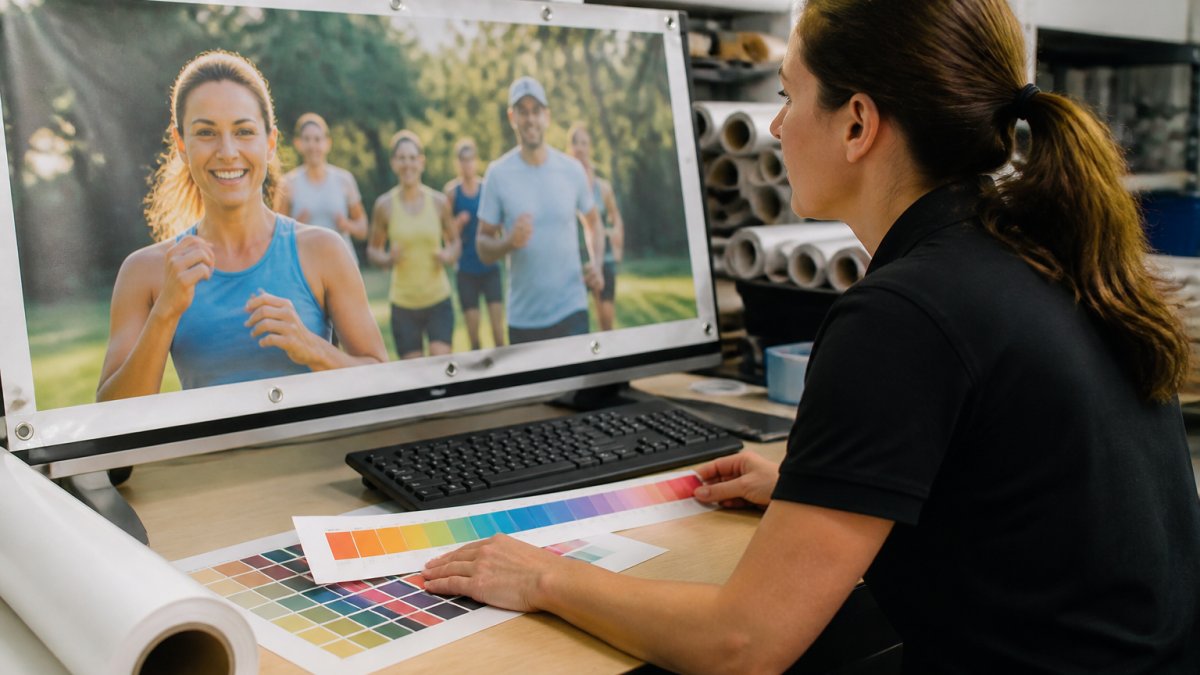
Run this checklist before you submit:
- Resolution at least 150 DPI at full print size (300 DPI for close-viewed banners)
- Color mode set to CMYK, not RGB
- Bleed of 0.25 inches on all sides
If you lack a print-ready file, C3 DesignsBiz handles same-day custom design. Catching a problem at the proof stage costs minutes; catching it after printing costs a full reprint.
Finishing Options: Grommets, Hems, and Display Hardware
Finishing options determine how your banner attaches and how long it survives handling. Grommets are metal rings set into the edges for rope or zip-tie mounting. Hems are folded, sewn edges that reinforce against tearing. Pole pockets slide over a rod for a clean, hardware-free look. For trade show banners, grommets every 2 feet along the top and bottom give the most flexible mounting; for repeated backdrops, hems plus grommets extend its life.
Shipping, Pickup, and Contingency Planning for Deadline-Critical Events
Shipping and pickup decide whether a banner printed on time actually reaches you on time. Local pickup is fastest when you are near the facility. Nationwide overnight shipping is standard for out-of-state events but depends on carrier cutoffs that vary by destination. Confirm the delivery date, not just the production date.
Pickup vs. Ship: A Decision Framework
Choose your delivery method before ordering:
- Within driving distance, event within 48 hours: Pick up. Removes carrier risk entirely and lets you inspect the banner before leaving.
- Out of state, event within 48 hours: Overnight shipping, but only if you can hit the shop's shipping cutoff.
- Out of state, event 3-7 days out: Standard expedited shipping, the best balance of cost and reliability.
A Pre-Event Contingency Checklist
Build this into your order process, not your event-day scramble:
- Confirm the production cutoff and the shipping cutoff separately, in writing
- Confirm the carrier's cutoff for your destination ZIP code
- Keep the approved digital proof saved and accessible on your phone
For a trade show starting Monday, do not order Friday afternoon and assume it will arrive. Confirm the delivery window in writing and build in one business day of buffer.
What to Do If the Deadline Slips
If a problem surfaces, wrong size, wrong color, or a missed shipment, act in this order:
- Call the vendor immediately and ask for the fastest reprint or a partial refund.
- Fall back to the digital proof on a screen or printed at a local copy shop.
- Document the failure with photos and the order number for any claim.
The vendors that handle rush orders best state the cutoff up front and confirm the delivery window in writing. If a vendor will not commit to a delivery date, treat that as a warning sign and plan a backup.
Installation, Transport, and Storage: Making Your Banner Last Beyond One Event
Installation, transport, and storage decide whether your banner survives one event or ten. A vinyl banner that is rolled, not folded, and stored in a cool, dry place keeps its print quality and avoids creases that show up under stage lighting.
Practical handling rules:
- Roll banners around a cardboard tube for transport, print side out
- Never fold along a printed area; if you must fold, fold along a hem
- Wipe with a soft, damp cloth; avoid solvents that degrade the vinyl coating
For multi-event use, invest in a storage tube and labeled inventory sheet. Teams that reuse banners across a season save reprinting costs and the risk of a rush order before every show.
Conclusion
The hardest part of fast vinyl banner printing for events is not the printing, it is the coordination. File readiness, production cutoff, finishing, and shipping all have to line up before your event date; miss one and the banner arrives after the doors open. At C3 DesignsBiz, we built our process around same-day custom design, fast nationwide turnaround, and premium printing so urgent event signage does not force a quality trade-off.
Frequently Asked Questions
How fast can I get a custom banner printed?
Same-day vinyl banner printing is possible when artwork is print-ready and submitted early in the day. Production typically runs a few hours for standard sizes, with grommets and hems added during finishing. If your file needs design work or color correction, add time for a proof approval. For events within 36 hours, confirm the cutoff time with your printer before ordering, and choose overnight shipping or local pickup to remove transit risk.
What is the difference between a 13 oz and an 18 oz vinyl banner?
The number refers to the weight of the vinyl per square yard. A 13 oz banner is lighter, easier to hang, and suited to indoor use or short outdoor runs. An 18 oz banner is thicker, resists tearing and wind stress better, and holds up through repeated outdoor events. If your banner will face wind, rain, or more than a few installations, the heavier material usually costs less over its lifespan because it lasts longer.
What file format and resolution should I use for a vinyl banner?
Send vector files such as PDF, AI, or EPS with fonts outlined whenever possible. For raster artwork, build the file at full size or at half size at 150 dpi, which equals 300 dpi at final print scale. Keep text at least 2 inches tall for every 10 feet of viewing distance, and leave a few inches of margin so grommets and hems do not cut into your design. A quick file check before submission prevents costly reprints.
Can I pick up a custom banner, or does it have to be shipped?
Both options exist depending on the provider. Local pickup removes shipping time entirely, which matters when your event is the next morning. Nationwide shipping with overnight service works when no local printer is available, but confirm the carrier cutoff and whether the banner ships rolled or folded. For deadline-critical orders, ask for a tracking number the moment the banner leaves production so you can plan installation around the actual arrival time.